
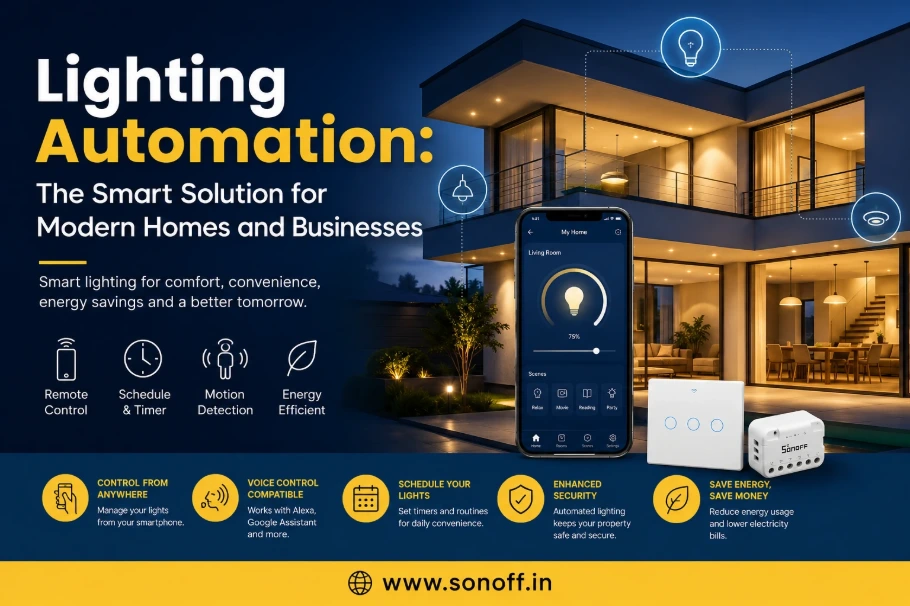
Lighting Automation for Comfort, Efficiency, and Smart Living
Lighting automation has transformed the way people control indoor and outdoor lighting. Modern smart lighting systems provide convenience, energy savings, and improved security. Whether for homes, offices, hotels, or commercial buildings, automated lighting creates a smarter and more comfortable environment.
Today, users can control lights remotely through smartphones, voice assistants, or scheduled timers. As a result, lighting automation has become an essential part of every smart home and intelligent building.
What Is Lighting Automation?
Lighting automation is a smart system that controls lights automatically based on schedules, occupancy, motion, daylight, or remote commands. Instead of using traditional switches, users can manage lighting through mobile apps, voice control, or centralized automation platforms.
Furthermore, the system reduces manual effort while improving convenience throughout the property.
Key Features of Lighting Automation
Smart Remote Control
Users can turn lights on or off from anywhere using a smartphone application. Therefore, they always stay connected to their lighting system.
Voice Assistant Integration
Lighting automation works with popular voice assistants. Consequently, users can control lights using simple voice commands.
Scheduled Lighting
Create daily or weekly schedules to switch lights automatically. This feature helps maintain routines without manual operation.
Motion Detection
Motion sensors activate lights only when movement is detected. As a result, energy consumption decreases significantly.
Scene Control
Users can create customized lighting scenes for different activities. For example, one tap can activate movie mode, dinner mode, or reading mode.
Brightness Adjustment
Smart dimming allows users to control brightness according to their needs. Therefore, every room maintains the perfect lighting level.
Energy Monitoring
Some advanced lighting automation systems monitor electricity usage. Consequently, homeowners can identify opportunities to reduce energy costs.
Benefits of Lighting Automation
Lower Electricity Bills
Automated lighting switches off unnecessary lights automatically. Therefore, it minimizes power consumption and lowers utility expenses.
Improved Home Security
Scheduled lighting creates the appearance of occupancy while homeowners are away. As a result, it discourages unwanted visitors.
Greater Convenience
Users no longer need to check every room before leaving. Instead, they can control the entire lighting system with a single tap.
Extended Bulb Life
Lights operate only when required. Consequently, bulbs last longer and require fewer replacements.
Enhanced Comfort
Different lighting scenes improve the atmosphere for work, relaxation, entertainment, and family gatherings.
Eco-Friendly Solution
Reduced energy usage lowers carbon emissions. Therefore, lighting automation supports a greener and more sustainable lifestyle.
Applications of Lighting Automation
Lighting automation is suitable for various environments, including:
- Smart Homes
- Apartments
- Villas
- Office Buildings
- Hotels
- Restaurants
- Retail Stores
- Hospitals
- Educational Institutions
- Warehouses
- Industrial Facilities
- Parking Areas
- Outdoor Landscapes
- Commercial Complexes
Each application benefits from improved efficiency, convenience, and intelligent lighting control.
Popular Lighting Automation Technologies
Wi-Fi Lighting Automation
Wi-Fi systems connect directly to the home network. Therefore, installation remains simple and user-friendly.
Zigbee Lighting Automation
Zigbee technology offers stable communication between multiple smart devices. Consequently, it performs well in larger automation networks.
Matter-Compatible Lighting
Matter technology improves compatibility across different smart home ecosystems. As a result, users enjoy greater flexibility and easier integration.
Bluetooth Smart Lighting
Bluetooth lighting is suitable for smaller spaces. Moreover, it provides reliable local control without requiring internet access.
How Lighting Automation Improves Everyday Life
Smart lighting adapts to changing lifestyles effortlessly. Morning schedules gently brighten bedrooms. Evening routines automatically create a relaxing atmosphere. Motion sensors illuminate hallways during the night. Meanwhile, outdoor lights operate according to sunset and sunrise schedules.
Additionally, homeowners can monitor and control lighting remotely during vacations. This capability improves security while offering complete peace of mind.
Choosing the Right Lighting Automation System
Selecting the right system depends on several factors:
- Property size
- Number of lighting circuits
- Wireless technology
- Mobile application support
- Voice assistant compatibility
- Future expansion requirements
- Installation flexibility
- Energy monitoring features
Therefore, choosing a scalable solution ensures long-term performance and reliability.
Maintenance and Reliability
Modern lighting automation systems require very little maintenance. Software updates improve performance and security over time. Furthermore, quality smart switches and controllers deliver reliable operation for many years.
Routine inspections also help maintain optimal system performance and ensure seamless automation.
Future of Lighting Automation
Lighting automation continues to evolve with artificial intelligence, advanced sensors, and cloud connectivity. Smart systems now learn user behavior and automatically optimize lighting schedules. Consequently, future automation will become even more intelligent, efficient, and personalized.
Businesses and homeowners alike are adopting smart lighting to improve comfort while reducing operational costs. Therefore, lighting automation will remain a key component of every smart building.
Conclusion
Lighting automation combines convenience, energy efficiency, safety, and intelligent control in one powerful solution. It simplifies daily life while reducing electricity costs and enhancing property security. Whether installed in a home, office, hotel, or commercial facility, smart lighting delivers lasting value and exceptional performance. Investing in lighting automation today creates a smarter, safer, and more energy-efficient future.